Updated October 8, 2026 · A local-style practical guide for first-time visitors
You walk into a stylish café in Seoul, see a screen with unfamiliar drink options, and wonder: should you take a seat, order first or wait for staff? Korean cafés are easy to enjoy once you understand a few small conventions. This guide explains the actual ordering process, handy phrases, payment, laptop etiquette and common mistakes—without assuming every café works the same way.
The 30-second answer
At many Korean cafés you order and pay first, receive a receipt or vibrating pager, then collect your drink when your number is called. Some cafés bring drinks to your table; others expect customers to pick up everything themselves. Before leaving, look for the return counter marked 반납 (return). The exact routine depends on the café.
1. Choose a seat—or check the seating rule first
In an ordinary neighborhood café you can often find a seat before ordering, but small shops, busy brunch cafés and dessert cafés may ask you to order first. Some have a one-drink-per-person policy (1인 1음료) and a time limit. If a seat has belongings on it, do not assume it is available. If you’re traveling with a group, look for a sign about minimum orders.
2. Recognize the difference between a counter and a kiosk
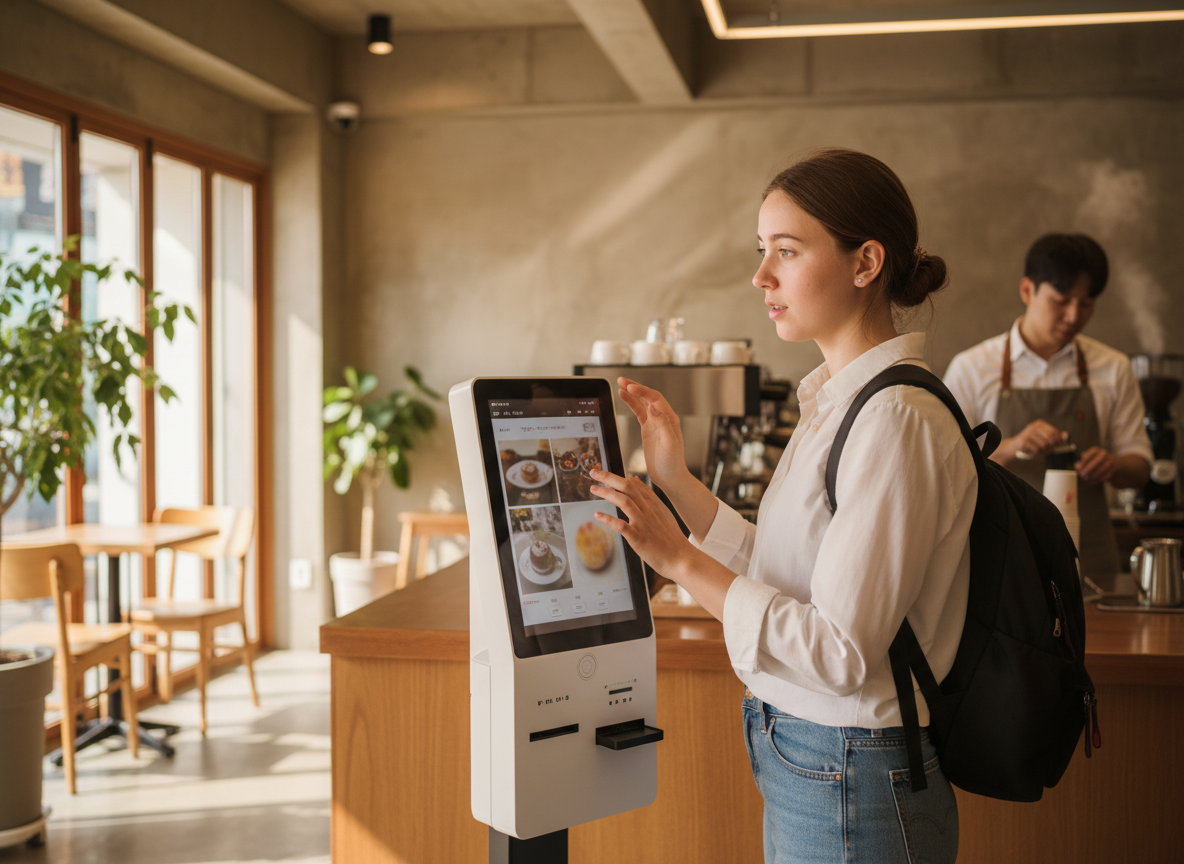
Larger chains may use a touchscreen kiosk. Smaller cafés often take orders face to face. At the counter, say 아이스 아메리카노 하나 주세요 (aiseu amerikano hana juseyo): ‘One iced Americano, please.’ Most menus distinguish HOT and ICE. A café’s seasonal menu, sizes and substitutions vary; examine the options before completing payment.
3. Decide whether you’ll drink in or take away
Staff may ask 드시고 가세요? (Are you drinking here?) or 포장이세요? (Is it to go?). Useful answers are 먹고 갈게요 (I’ll have it here) and 포장해 주세요 (Please make it takeaway). Some cafés use different cups depending on your answer. Disposable-cup rules can vary by venue and current local policies, so follow posted guidance.
4. Understand payment and the pickup buzzer
Many cafés ask you to pay immediately. Card payment is common, but an individual terminal may reject a foreign-issued card. Have a second payment method ready. If staff hand you a small vibrating pager, carry it to your seat. When it buzzes, return it to the pickup counter and collect your drink. Other cafés display order numbers on a screen or call the drink name.
5. Learn the Korean words around you
주문 — order; 픽업 — pickup; 반납 — return; 셀프 — self-service; 화장실 — restroom; 와이파이 — Wi-Fi; 콘센트 — power outlet. You may see 노트북 이용 제한, meaning laptop use is restricted. Signs on individual tables can also specify rules.
6. Know what ‘self-service’ includes
A station with straws, napkins and water may be self-service. Some cafés have a return shelf for finished cups and trays. Other shops expect you to leave dishes on the table for staff. Don’t place leftovers or liquids into a recycling bin unless the station says to. When unsure, ask 어디에 반납하면 돼요? (‘Where should I return this?’).
7. Working or studying in a café: what to check
Korean cafés are popular places to chat, work and read, but policies vary significantly. Never assume you can occupy a table for hours after buying one drink. Look for time limits, outlets and ‘no laptop’ signage; avoid taking multiple seats for a single person. Some specialty cafés are designed for quiet study, while others discourage laptops during busy periods. Follow the shop’s specific rules rather than relying on a nationwide stereotype.
8. Specialty cafés: animals, themed cafés and dessert shops
Not every place with ‘café’ in its English name functions like a traditional coffee shop. An animal-themed café may have an entrance fee and animal-welfare or hygiene rules. A character-themed café may require reservations. Dessert-focused cafés can have one-item-per-person requirements. Check the operator’s official page before visiting, especially if you expect to photograph, handle animals or bring children.
9. The practical etiquette visitors often miss
Keep your voice considerate in a quiet small café, especially if customers are working. Ask before photographing staff or other guests. Check whether outside food is permitted. Some cafés enforce a minimum purchase per person. If you’ve ordered a fragile dessert, collect it promptly when called. Take your belongings when you leave; cafés are not responsible for unattended personal items.
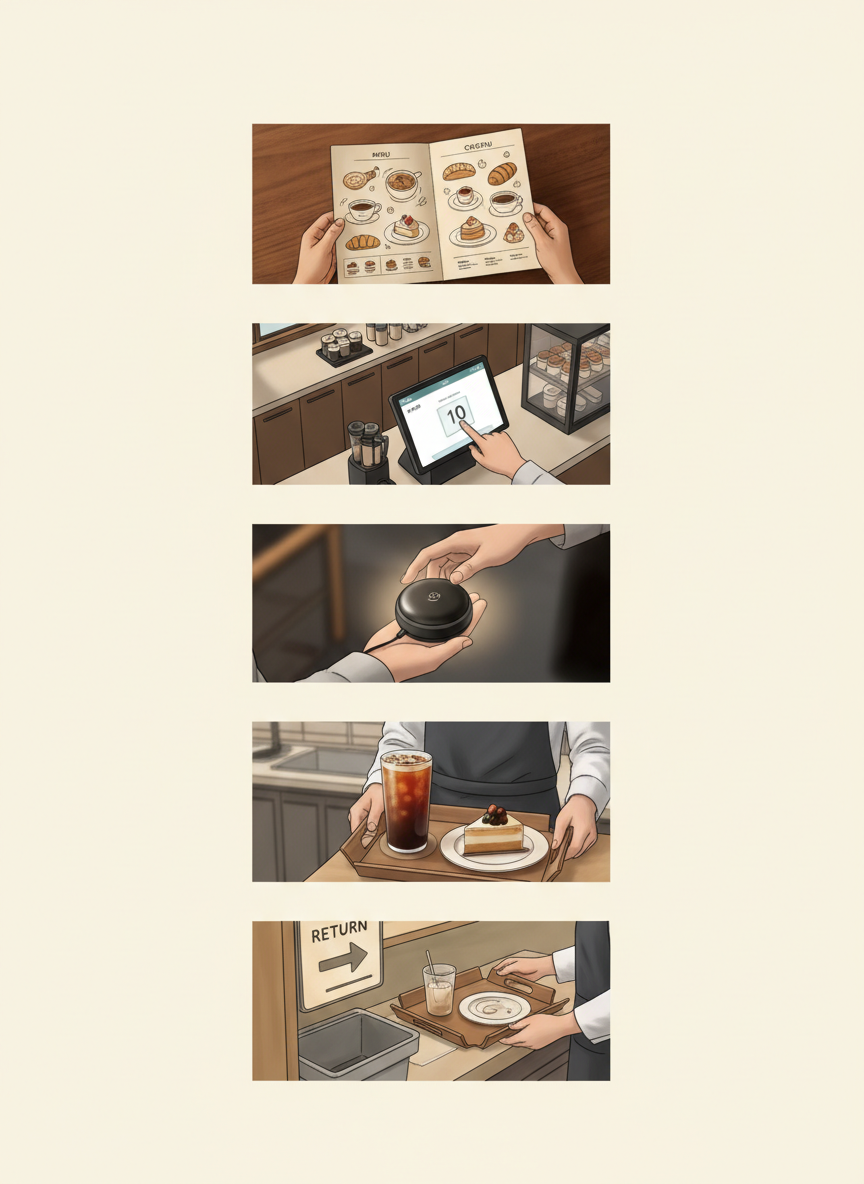
10. A realistic first visit in five steps
Step 1: Check whether you should take a seat before ordering. Step 2: Pick a drink and say hot or iced. Step 3: Tell staff whether you’re staying or taking away, then pay. Step 4: Wait for your pager or number and pick up the drink if directed. Step 5: Follow the shop’s instructions for returning your cup or tray.
Useful phrases to save on your phone
아이스 아메리카노 하나 주세요. — One iced Americano, please.
포장해 주세요. — Please make it to go.
먹고 갈게요. — I’ll have it here.
와이파이 비밀번호가 뭐예요? — What’s the Wi-Fi password?
콘센트 사용해도 돼요? — May I use the outlet?
어디에 반납하면 돼요? — Where do I return this?
감사합니다. — Thank you.
FAQ: common first-time questions
Is tipping expected? Generally, no; ordinary café service in Korea does not require a tip.
Can I pay with an international bank card? Often yes, but card-network and terminal acceptance can differ; keep a backup.
Does every café offer free Wi-Fi? No. Ask or look for a posted network name and password.
Can I take photos? Photographing your own drink is generally fine, but respect requests not to photograph staff, customers or restricted areas.
Can I sit without ordering? Do not assume so. Most commercial cafés expect customers to buy something; some also have per-person minimums.
Your next Korean café visit
The best part of café culture in South Korea is its variety: a tiny neighborhood espresso bar, a spacious design café and a busy chain all offer a slightly different experience. You don’t need perfect Korean to enjoy them. Recognize the ordering flow, respect each shop’s rules and stay curious about the details. At K-Culture in Korea, we explain the little things that help visitors explore everyday life with confidence.
Related local guides and editorial note
If you’re looking for a quick meal, see our Korean convenience store guide. To understand food ordering and side dishes, read our Korean restaurant etiquette guide.
Reviewed October 8, 2026. This article describes common visitor experiences, not universal requirements. Café menus, seating rules, payment options and services vary by location. Check posted rules and ask staff when unsure.


Leave a comment