
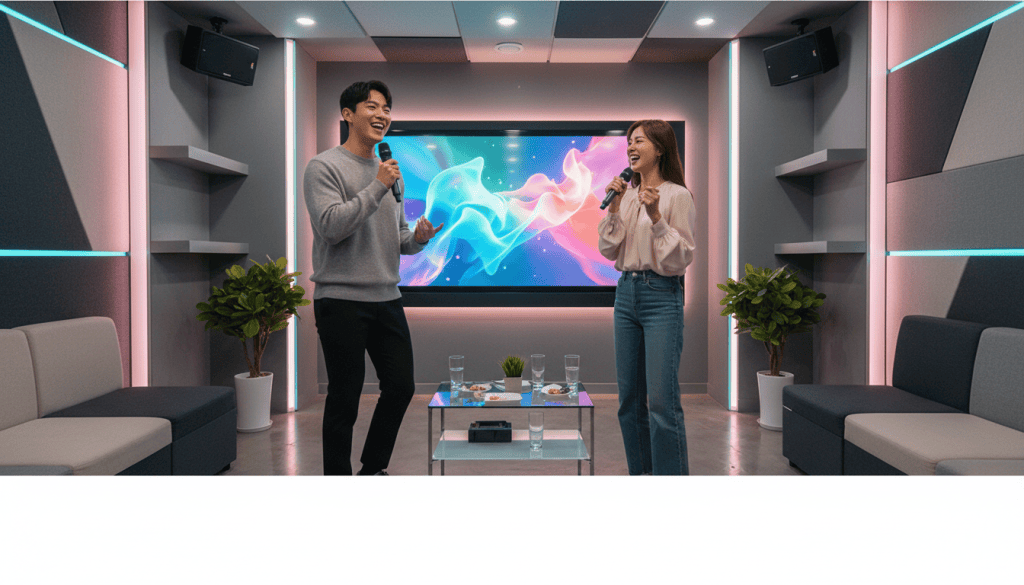
Do you want to sing a K-pop song in Korea without stepping onto a public stage? Try a noraebang (노래방), a private karaoke room where you sing with friends or, at some locations, on your own. A coin noraebang (코인노래방) is usually the quick-session alternative. This guide explains what to check before paying, how to choose songs, what the controls mean, and how to avoid a frustrating first visit.
Jump to a section
The short answer: private room, music screen, your own group
A Korean noraebang is typically a private room equipped with a screen, speakers and microphones. Unlike a public karaoke bar where strangers may be watching, you usually sing only with the group that entered your room. Coin-style venues are often designed for short sessions, whereas larger regular noraebang rooms may be booked for a block of time. The exact format depends on the operator.
The Korea Tourism Organization introduces noraebang as part of Korean ‘room culture’ shown in dramas and other K-content. That makes the singing experience a cultural stop as much as a music activity. But a venue’s current pricing, age restrictions, entrance policy and equipment rules come from its posted notice, not from a general tourism article.
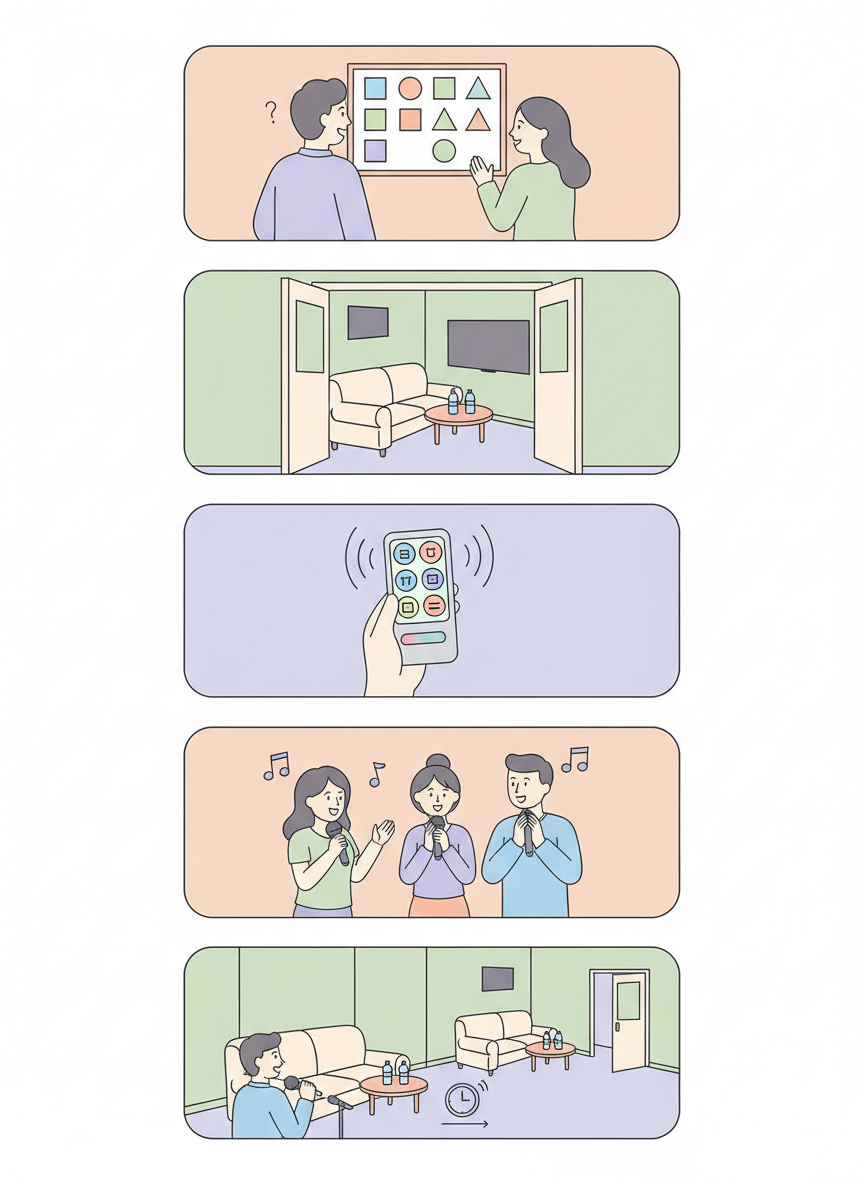
Five steps for your first coin noraebang session
1. Choose a room that fits your group and budget
A solo visitor may prefer a small coin room, while four friends may be more comfortable in a larger private room. Look at the displayed price, room capacity, payment methods and time allowance. Do not assume a sign advertising a low coin amount applies to every room or time slot. If the place is crowded, confirm whether you pay at a machine, a counter or inside the room.
2. Ask what is included in the session
Some machines take payment for a fixed number of songs; others start a timed session. Ask if microphone covers, extra time or snacks are included. If a screen shows a countdown, notice whether the system begins charging as soon as you pay or only once the first song starts. Keep a receipt or a note of the machine number in case there is a payment problem.
3. Learn the basic remote-control functions
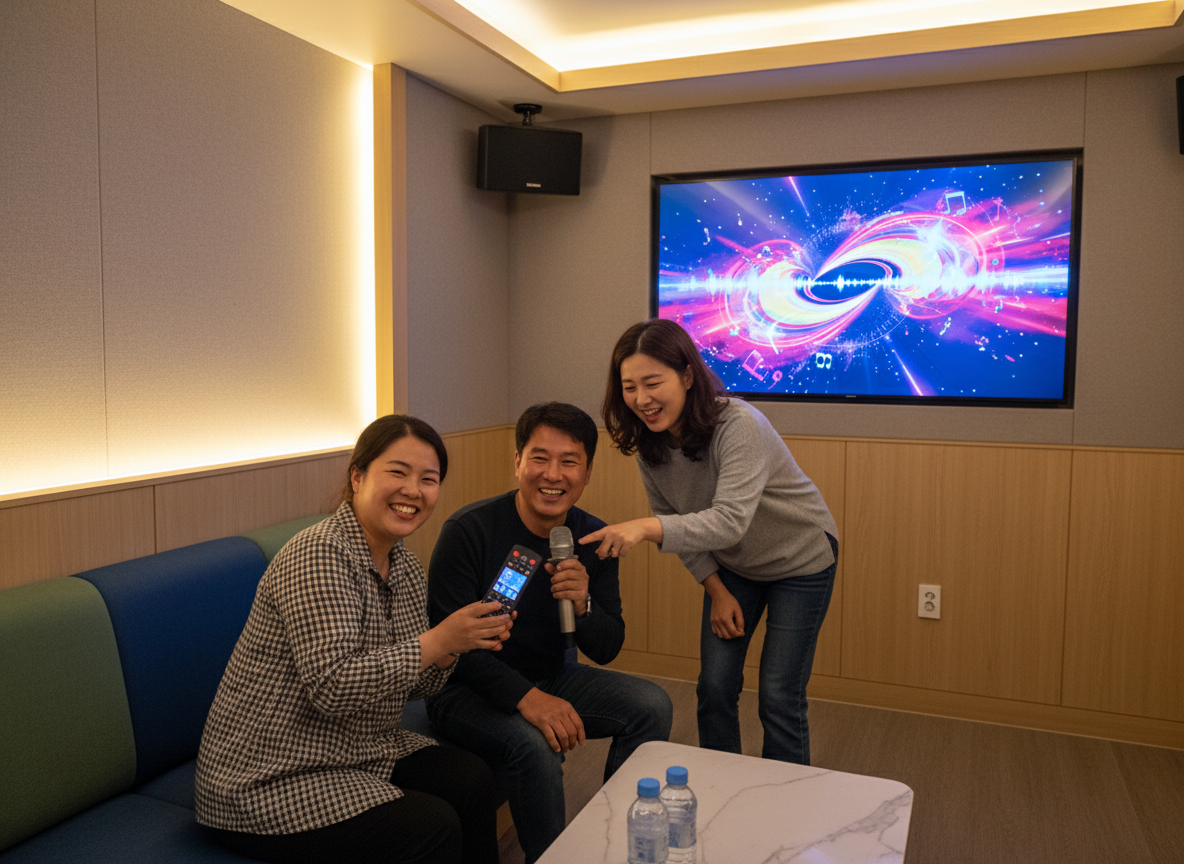
Common Korean labels include 선곡 (select a song), 예약 (queue a song), 취소 (cancel), 시작 (start), 정지 (stop), 음량 (volume) and 키 (musical key). Buttons, menus and song catalogues differ, so use the room’s instructions rather than assuming every remote works identically.
4. Pick songs everyone can enjoy
Try one familiar chorus before choosing a technically difficult track. International hits may be listed under English titles, artist names or phonetic search. K-pop songs can appear under Korean titles, English titles or artist categories, depending on the system. If your group shares one remote, take turns queuing songs and ask before removing another person’s choice.
5. Finish on time and leave the room ready
Watch the remaining song count or clock and finish before the paid session ends. Put microphones and remotes back where they belong, take your phone and bag, and follow the venue’s disposal rules for any cups or wrappers. If you need more songs or time, check the on-screen price and the venue’s procedure before paying again.
Coin noraebang vs. regular noraebang: which suits you?
- Coin-style room: useful for a short visit, solo singing or a small group; check whether payment is per song or by time.
- Regular private room: can be more comfortable for a larger group or a longer session; confirm room size, hours and reservation policy.
- Sound and microphone: ask about volume or missing equipment before you start rather than risking a dispute afterward.
- Accessibility: check stairs, elevators, room entry, seating and bathroom accessibility before making a booking.
- Restrictions: verify any minors’ entry rules, venue closing hours and whether food and drinks from outside are permitted.
Neither type is automatically ‘better.’ Choose the one with a visible price, understandable instructions and an atmosphere you feel comfortable in. If you are concerned about volume, start low and raise it gradually; different microphones and speaker systems may react quite differently.
Etiquette and personal safety in a private singing room
Private does not mean unrestricted. Be considerate of neighboring rooms, keep doors unobstructed, and respect capacity limits and staff instructions. Do not film other customers or their room without consent. Share the microphone and let shy friends sit out a song. The goal is a relaxed experience, not a performance test.
Keep personal belongings with you and use the main entrance and legitimate venue staff for help with payment or equipment. Do not follow strangers into unknown back rooms because someone offers a ‘better deal.’ If you feel uncomfortable, leave and choose another well-marked business. Emergency and tourist assistance contacts are explained in our 1330 Korea travel help guide.
Useful Korean phrases at the entrance
- 코인노래방 어디예요? — Where is the coin karaoke room?
- 한 곡에 얼마예요? — How much per song?
- 이용 시간은 얼마예요? — How much time do we get?
- 영어 노래 있어요? — Do you have English songs?
- 마이크가 안 돼요. — The microphone isn’t working.
It is fine to point to a price chart or demonstrate an equipment problem rather than speaking perfect Korean. A translation app can help you describe a malfunction, but avoid entering sensitive payment information into a random venue QR form you do not trust.
First-visit FAQ
Do I need to sing in front of strangers?
Ordinary noraebang rooms are private to the group using the room. Check the exact type of venue before entering; performance bars and public karaoke stages are different products.
Can I go alone?
Many small coin-style rooms are suitable for solo sessions. Still check the location’s operating hours, entrance rules and whether its payment method works for you.
How much does Korean karaoke cost?
There is no reliable single fixed nationwide price. Rates differ by venue, area, number of songs, room size and time. Treat a sign or online example as provisional until the venue confirms the total.
Are drinks or snacks part of the room price?
Do not assume so. Some venues sell refreshments; others restrict outside food and drink. Read the posted rules before entering with purchases.
Official context and what to read next
- Korea Tourism Organization — Korean room culture including noraebang.
- How Korean cafés and kiosks work.
- Payment backup options for Korean visitors.
- Start Here — more Korean culture experiences.
Editorial review October 10, 2026. General usage instructions, not a live confirmation of any individual karaoke business. Venue-specific ages, hours and prices must be checked locally. Images are AI-generated illustrative scenes.

Leave a Reply